
Live webinar for business owners
The 7 levers of a cash-rich business
For SME owners whose revenue keeps climbing while the bank balance doesn't. Ninety minutes on where the cash actually goes — and the seven levers that bring it back.
Limited seats, kept small so the Q&A stays useful.

Growing revenue, and a bank balance that won't follow
Most owners who join have already asked their CA about this. The usual answer is "your receivables are high" — true, and not especially useful. The question is which customers, how many days, and what changes on Monday.
Almost every owner who joins these sessions arrives with a version of the same question. Sales are up. The profit and loss statement looks reasonable. And yet paying for the next order still feels tight, and nobody can say exactly why.
The answer is rarely in the profit and loss statement. It's in the balance sheet — receivables that stretch a little longer each quarter, stock bought for an order that changed, advances sitting with suppliers.
the day you raise the invoice
the day the customer pays
The distance between those two events is where working capital quietly disappears. What makes it hard to fix isn't the maths — it's that the numbers usually arrive weeks after the decisions were made, so the business is always reacting to a month that already closed.
Who this is for
Built for owners, not accountants
This session is for the person who signs the cheques and carries the consequences. No finance background is assumed.
Join if this sounds like you
- —You own or run an established SME and revenue is growing
- —Profit shows on paper but cash feels tight
- —You're the only person who really understands the numbers
- —Your monthly figures arrive too late to act on
- —You're planning three to five years out — growth, valuation, succession
Skip it if
- —You'd rather hand finance over entirely and not look at it
- —You're after a shortcut rather than a system
- —You want tax-saving tricks or investment tips
- —You're a student or job seeker looking for accounting training
What you'll be able to do by Monday
Four things you can do with your own numbers the same week.
Measure your own cash cycle
Calculate how many days your money is tied up before it returns, and see which of the three stages is holding it.
Name your real profit drivers
Split the profit and loss statement by segment so a strong line stops covering for a weak one.
Fix the monthly reporting date
Set a closing discipline so the numbers land while there's still time to act on them.
Run one decision meeting
A short monthly review built on a handful of numbers, with a clear agenda instead of a status update.
The seven levers
Each one compounds the next, which is why they're taught in this order rather than picked from at random.
Books that close on time
Numbers you can act on arrive early in the month, not late. This is the hygiene lever everything else depends on — no framework survives unreliable data.
Cash conversion cycle
Paise ki speed badhao
Growth comes from how fast capital rotates, not only from how much of it there is. Same money, more journeys — measured, then shortened stage by stage.
Business structure and withdrawal
The routes owners use to take money out of a business, and how each one is treated for tax. Structure decides what reaches you from every rupee earned.
Segment profitability
A single total hides everything underneath it. Splitting profit by product, customer or division shows which parts of the business are funding the rest.
The AI-assisted finance function
Where AI genuinely helps a small finance team — cash forecasting, ageing stock, segment margins, collection risk and compliance dates — and where it doesn't.
Valuation
A business that runs well and a business that sells well aren't the same thing. How buyers arrive at a number, and which factors move the multiple.
The decision system
The monthly rhythm that holds the other six in place: a short set of numbers, a fixed date, and one meeting where decisions actually get made.
Because it's the same conversation we have in client rooms
Harshil and Sajal run a chartered accountancy practice. This framework isn't teaching material written for a webinar — it's the working method they use with owners month after month, taught publicly once a month in the same order.
Which means the session is short on theory and long on the questions that actually get asked across a table: where is the money, what is it doing, and what should change before the next quarter. You leave with the framework and your own numbers in it.
It's also live. Ninety minutes, real questions answered as they come, and no recording — because the useful part is working through your own figures while someone is there to check them.
Meet your mentors
CA Sajal Goyal
Co-founder · Chartered Accountant
- —19 years in finance, taxation, compliance and strategic consulting
- —Previously with Honda Cars India
- —Speaker at IIT Delhi and other institutes
CA Harshil Goyal
Co-founder · Registered Valuer
- —16 years in valuation, transaction advisory and reporting
- —350+ valuations handled
- —50+ mergers and acquisitions closed
Together they wrote Business Ka Financial Mirror, a workbook for SME owners on profit, cash flow and financial control.
Our profit has grown to 2.2 times what it was. The difference wasn't more sales — it was finally seeing where the money was going.
Praveen GoyalDirector, Amasia Multigrain Pvt Ltd
1.5 times the profit, and for the first time I know my numbers before the month is over instead of long after.
Jasjeev KohaliDirector, JJ Bakery
The Book to Bank report showed us exactly what was sitting in stock and receivables. Nothing else had made that visible.
Ravindra KondekarManaging Director, KCP Gauging Technology Pvt Ltd
What owners say after a session
Unedited messages from the community group in the hours after each webinar.
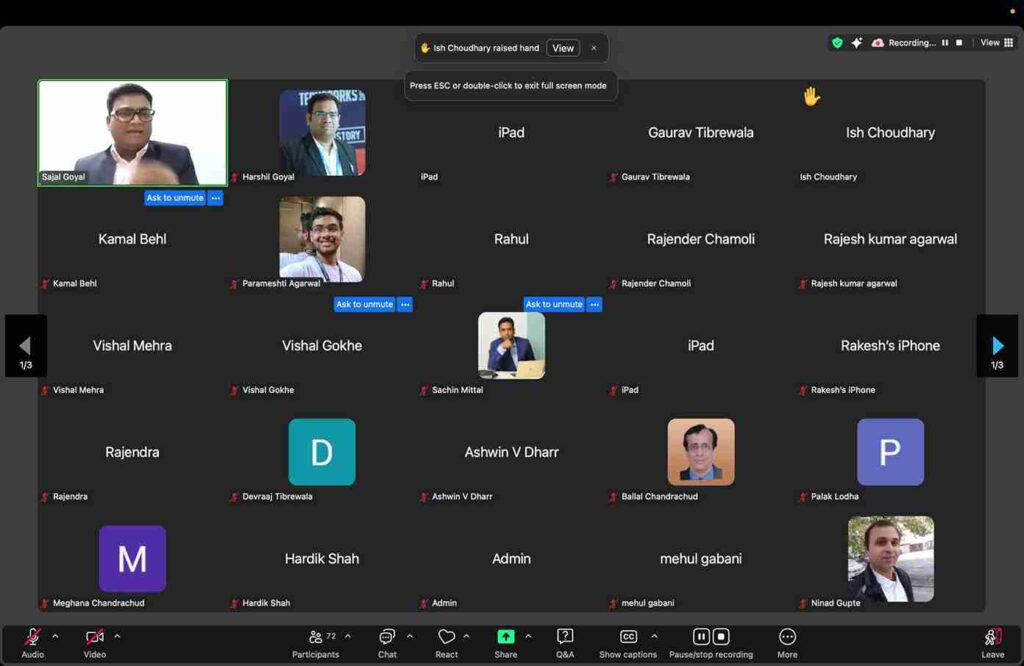
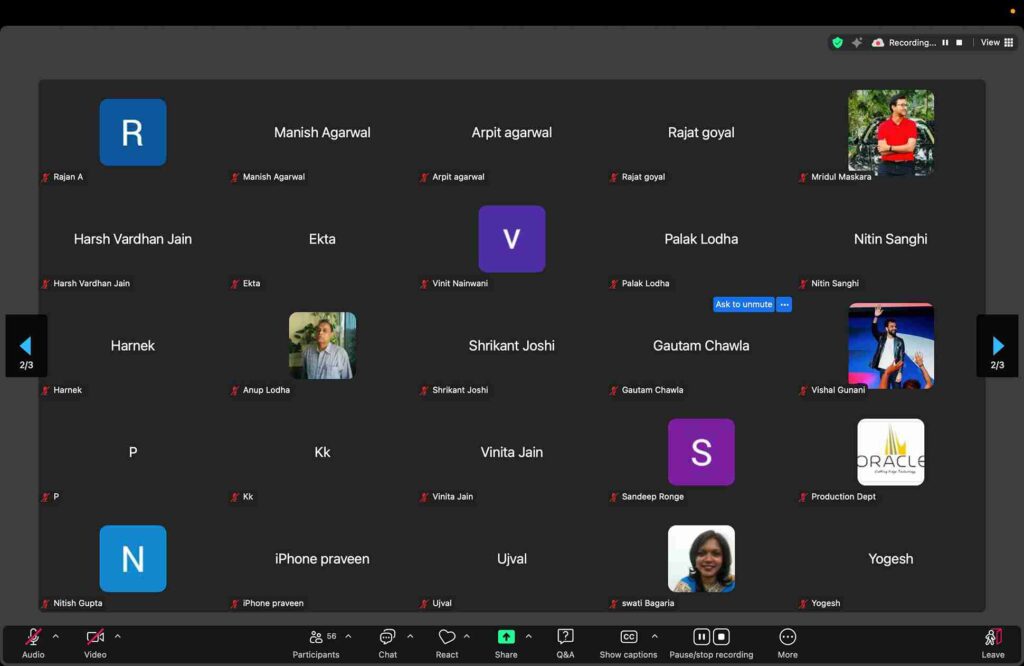

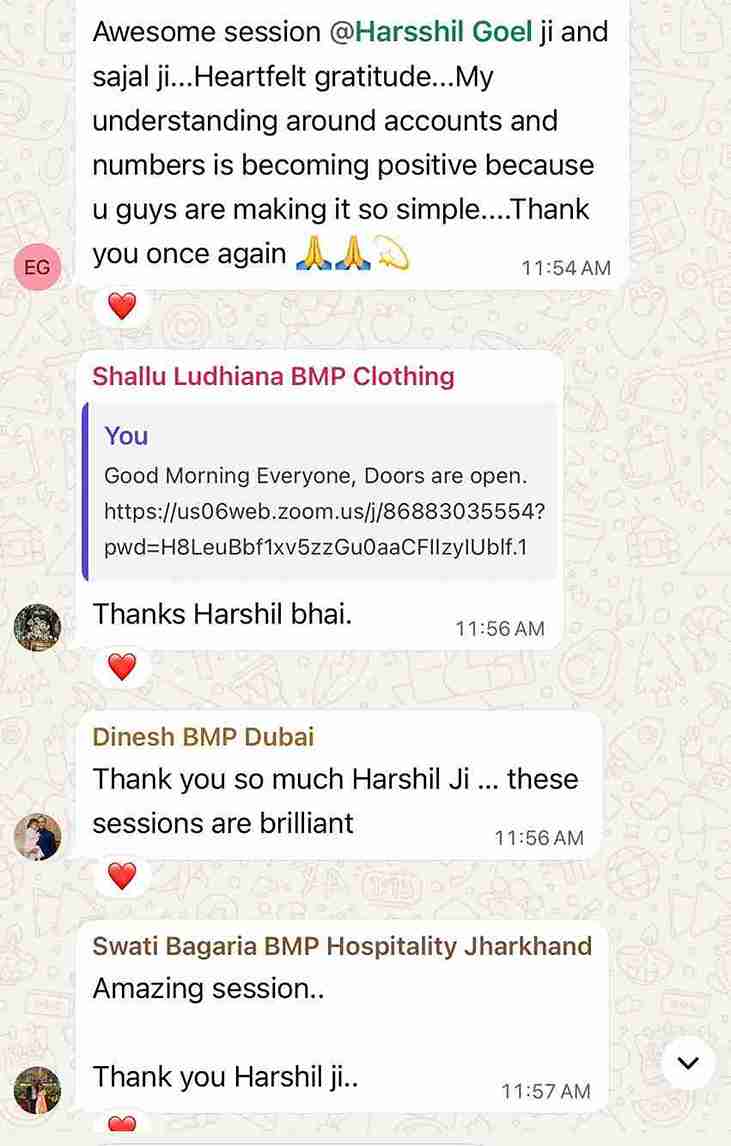
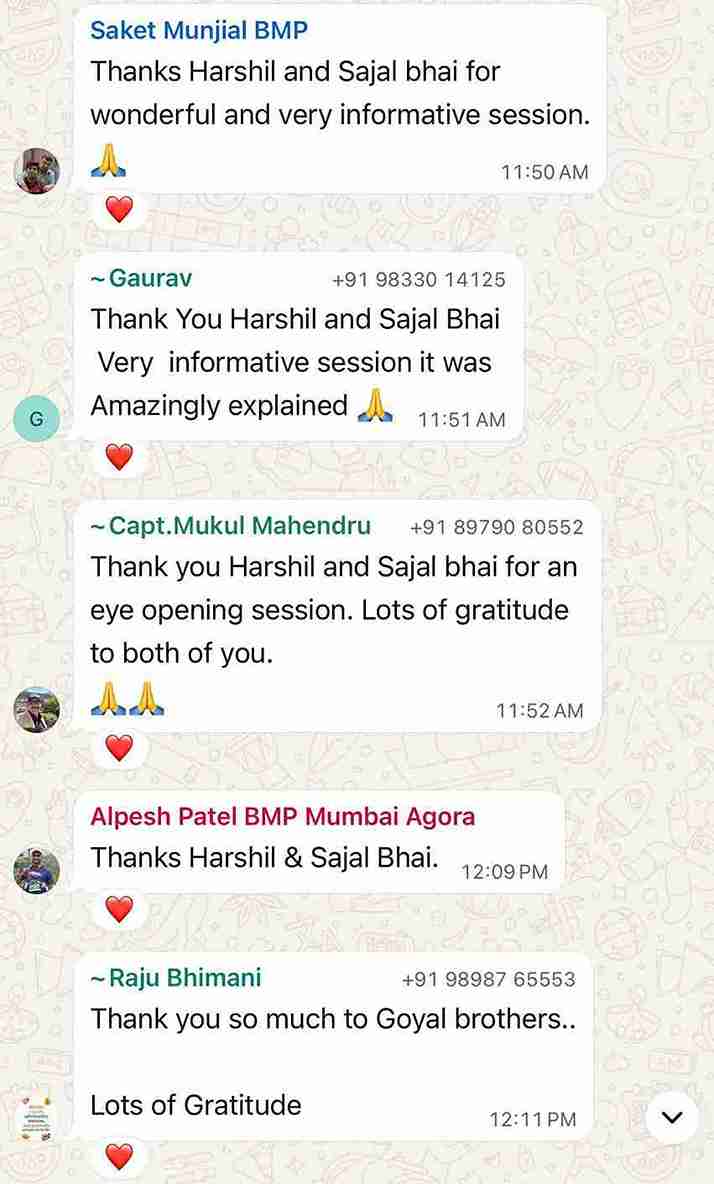
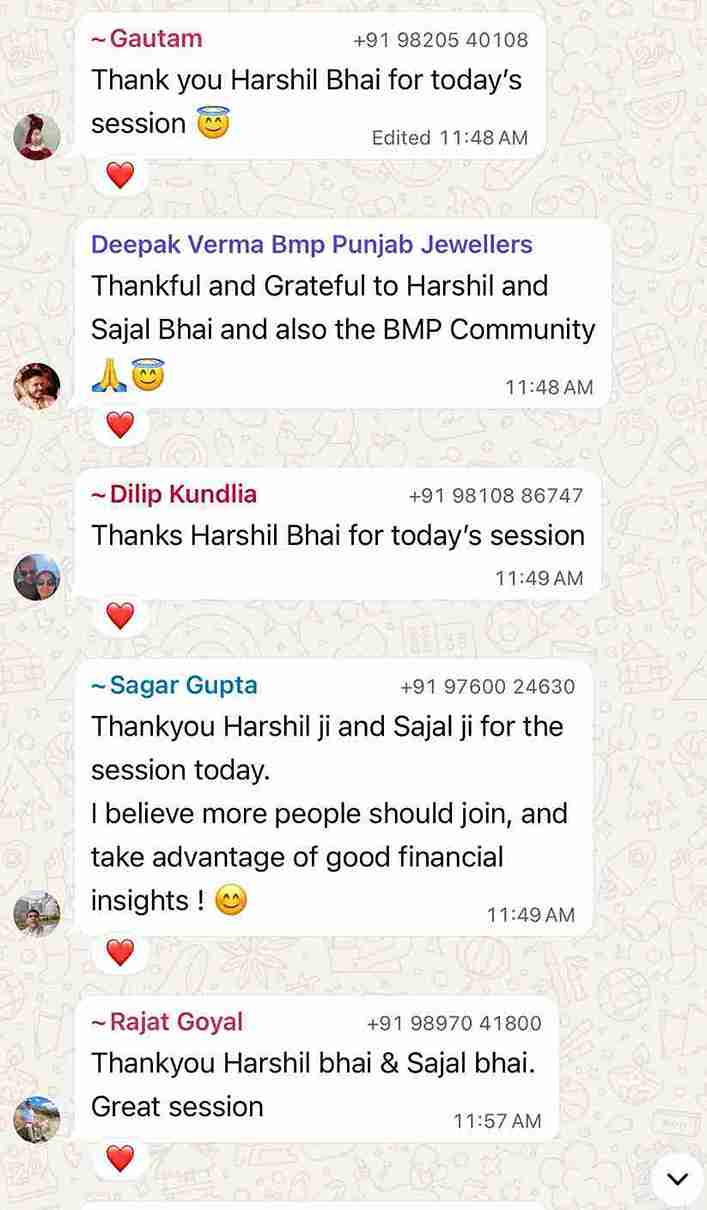
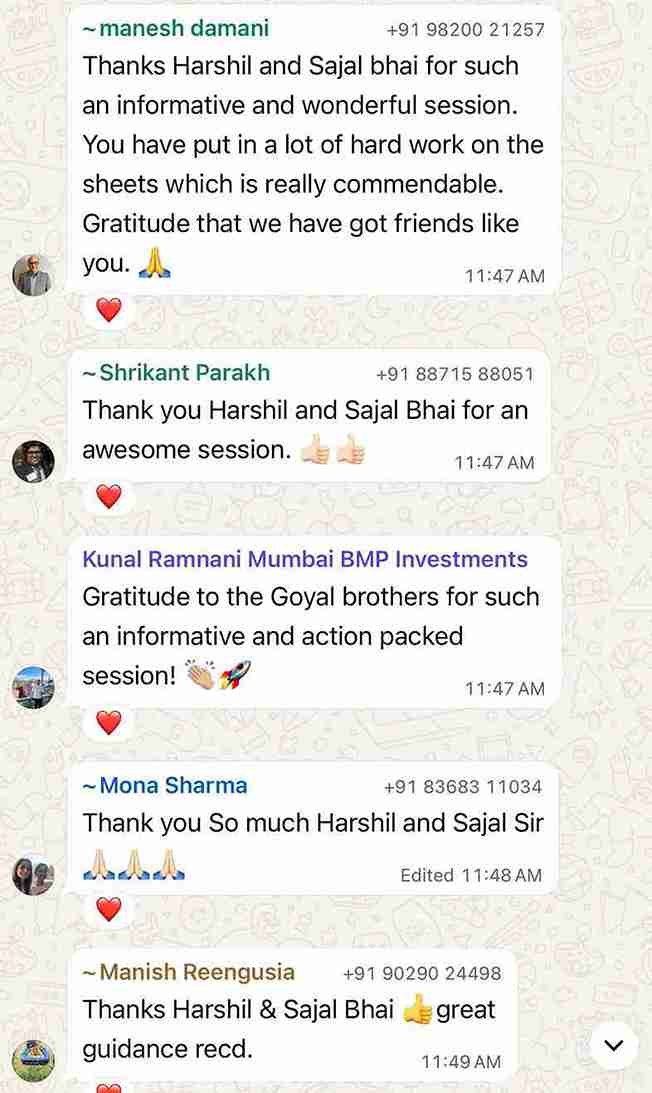
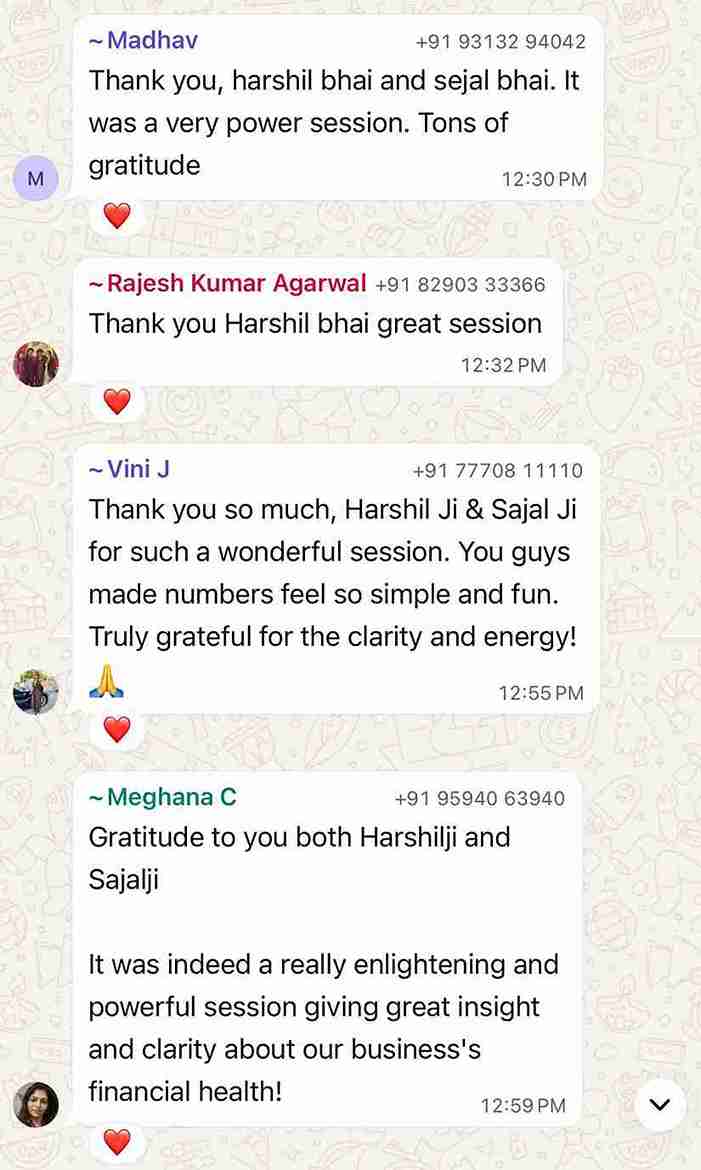
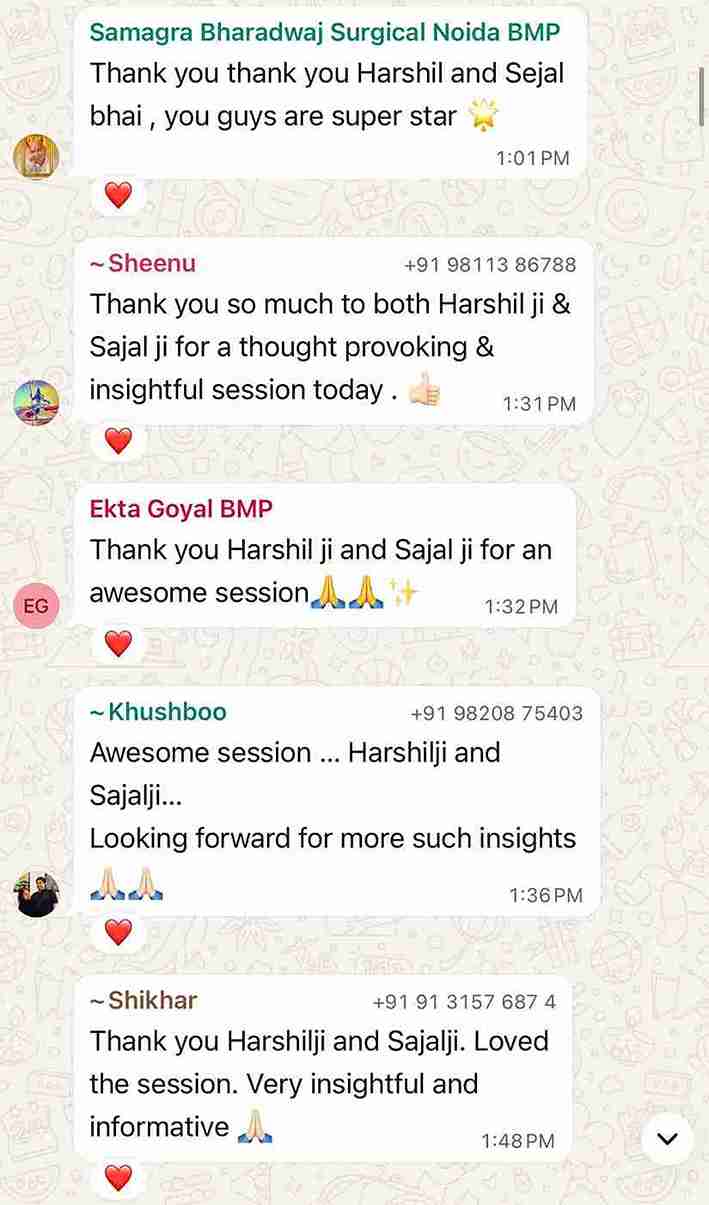
Shown as members posted them in the community group.
Registration
Reserve your seat
The joining link arrives immediately, with reminders on email and WhatsApp before we begin.
- WhenSunday, 27th September 2026 · 11:00 AM – 12:30 PM IST
- BringYour latest P&L and balance sheet, if you have them handy.
- RecordingNot promised — the session is built to be attended live.
Your details are used only to send the webinar link and reminders. You can opt out any time.
Questions owners ask
Frequently asked questions
Why does my business show profit but have no cash in the bank?
Profit is recorded when you raise an invoice. Cash arrives when the customer actually pays. Between those two moments sit your receivables, your stock, and the advances you've paid suppliers.
If those three keep growing, profit rises on paper while the bank balance stays flat or falls. The session covers how to measure that gap in your own business, and which of the three stages is holding the money.
What is a cash conversion cycle, and why does it matter for an SME?
It's the number of days between paying for inputs and collecting cash from your customer. The longer the cycle, the more working capital you need to run at the same turnover.
Shortening it releases cash that's already inside the business — which is usually faster and cheaper than arranging new funding.
Who is this webinar for?
Owners, directors and founders of established Indian SMEs across manufacturing, trading, retail, D2C and services. It's designed for the person who makes the financial decisions, not for the accounts team.
I'm not from a finance background. Will I be able to follow it?
Yes. No debit and credit, no journal entries, no accounting software training. Every concept is explained through business situations rather than accounting theory.
Is the webinar free? Is there a hidden fee?
Registration is free and there's no fee at any stage of the session. You receive the Zoom link and reminders by email and WhatsApp after registering.
Is there a sales pitch during the session?
The teaching stands on its own — you can implement every lever yourself from the session. Towards the end we explain how our team works with owners who'd prefer the system implemented for them. That's the only mention of paid work.
Will a recording be shared afterwards?
Recordings aren't guaranteed. The session includes live exercises on your own numbers and open Q&A, so we ask registrants to block the time and attend live.
Which numbers should a business owner review every month?
A small set, reviewed consistently, works better than a long report nobody reads. The session covers the specific figures we ask owners to track, healthy ranges by sector, and how to build one monthly review around them.
How is this different from what my CA already does?
Most accountants handle compliance and reporting — filings, returns, closing the books. This session is about the decision layer above that work, which a CFO would own in a larger company.
Both are needed, and they're not substitutes for each other.
Should I bring my accountant or finance head?
Not required — the session is built for the owner. Many owners do attend alongside their finance head so both hear the same framework and agree on the same monthly numbers afterwards.
Do I need to bring my financial statements?
It helps. Having your latest P&L and balance sheet nearby — or even just your receivables, stock and creditors figures — lets you work the exercises on your own business rather than on examples.
What language is the webinar in?
A mix of English and Hindi, the way most Indian business owners discuss their numbers in practice. Slides and worksheets are in English.
How do I join after registering?
The Zoom link is sent immediately by email and WhatsApp, followed by reminders before the session begins. Nothing beyond Zoom is needed.
Ninety minutes. Your numbers. Seven levers.
Sunday, 27th September 2026 · 11:00 AM IST
Reserve your seatRegistration closes Saturday, 26th September at 11:55 PM IST.